


What If You Got a Do-Over?
10-14-2026
What If You Got a Do-Over?
Gerald Bell, a professor at the University of North Carolina, conducted a survey studying the lives of 4000 retired executives. One of the questions he asked was:
If you could live your life over again, what you do differently?
Their top response ranked far ahead of all the others. It was:
I should taken charge of my life and set my goals earlier.
(By the way, in case you’re interested, the other answers in the survey were:
2) Taken better care of my health.
3) Managed money better.
4) Spent more time with family.
5) Spent more time on personal development.
6) Had more fun.
7) Planned my career better.
8) Given more back.
What can it teach us?
Maybe one of the eight most common responses resonates with you. Personally, I would have some of these answers on the list, but not in this order. And I would definitely have a few different answers as well. Maybe you’re like me, or maybe your answers are similar to the list. Either way, it’s not to late to correct your course.
You can start taking better care of your health today.
Or giving back more.
Or putting greater focus on those who are closest to you.
Or taking charge of the life in which God has made you a steward.
No point in waiting until after retirement to identify your life’s greatest should-have … unless, of course, you’re already retired — and then there’s no point in waiting one more day to begin living each day according to what matters most.
There are several things I would never change for anything:
1) My relationship with Jesus
2) My relationship with Helen and my children and grandchildren
3) My relationship with all of you.
How about you? It is never too early to review where you are and make necessary course corrections……..so that at the end of life we can say, “I fought the good fight and I kept the faith”.
I love you all!!!

Almost There
10/7/2026
When I say, “Almost There”, I’m referring to almost to the end of this election cycle. We’ll be able to go 2, maybe 3 weeks in peace before the next election cycle begins. Below you’ll find a few thoughts on the upcoming election…….the primary thought being, get out and vote. Read on………
As many of you know, at LifePoint, we don’t do politics. That’s not to say that we don’t address political issues because often political issues are Biblical issues. Our church family and our communities are politically diverse. I don’t know the political persuasion of everyone here at LifePoint, but I do know that we have a diversity of thought when it comes to politics. We have people on the left, people on the right, people somewhere in the middle and people who fall somewhere else entirely on the spectrum. What this means for us is that we have an incredible opportunity to model for our community and the surrounding area what it looks like to disagree politically and love unconditionally – and we are not about to alienate one (or more) group(s) of people for the sake politics.
I mentioned this a few years ago, but someone actually said to me, “I don’t know where you stand politically.” I was actually quite happy with that statement because where I stand politically is not nearly as important as how much I love you. I had someone ask me, “Why don’t you post political things on social media?” I answered, “First, because posting anything political on social media automatically alienates anyone and everyone in the other political party. My job is not to cause division, but to bring people together to follow Jesus. My priority is Jesus, not my political party.”
Let me just say it: Jesus is far greater than your political party of choice. And just because someone has a different political opinion than yours doesn’t mean they’re wrong. When Jesus called us to love one another, He called us to love unconditionally. Love others regardless of political party affiliation. Love others regardless of which political party is in power. He didn’t call us to love our political party unconditionally and have a disdain for the other political party. He called us to love people unconditionally. In other words, we cannot love people through our political filter, we must love others through our faith filter. Instead of evaluating our faith through the filter of our politics, we must evaluate our politics through the filter of our faith. There’s a big difference between the two.
I could write an entire sermon here, but I won’t. I simply want to do a couple of things:
1) I want to remind you that Jesus died for everyone – even those of “the other” political party. Their soul is worth far more than your political opinion.
2) Everyone of age should vote on November 3. This is your opportunity to have a voice in what happens in our country. Anytime you have an opportunity to vote, your “law of Christ informed conscience”, you should vote. I’ll post more information on this below.
3) We must not allow politics to divide us. At the very end, the thing that Jesus was most concerned about was the unity of His disciples, the unity of those who follow Him. Yes, there are many divisive issues out there, but Jesus was most concerned with the oneness of His followers because He knew that as long as they were in lockstep with His Heavenly Father and with one another, the world would change. But if they ever got divided and splintered, things would stall out.
Your political candidate will win or lose based on how American citizens vote, but the church will win or lose based on our behavior every day of our lives.
I love you all, church! I truly do! Let’s love one another, cast ballots, and then love one another some more.
Chuck
ps………The cutoff to register to vote is October 19. Polling places will be announced ahead of the election.
Not Yet
9-30-2026
I’m guessing that most of us have paused to pray at some point in our lives. Whether it was just before we asked that “certain someone” to the prom (“Dear, God, please let her say, ‘Yes’!”), or maybe it was when there were flashing red lights in the rear view mirror (“Dear God, please let this just be a warning.”)
Maybe it a prayer for someone else, a child, a parent, a friend or even a perfect stranger who happened to cross our path. Even if you’re not one who prays regularly, I’m guessing you’ve prayed from time to time.
Going along with that, I’m fairly certain that you’re familiar with the three possible answers to prayer. God may say, “Yes!” We get pretty excited about this one, right? God may say, “No”! We’re usually pretty bummed out when we get this answer, but in reality, often this answer is to protect us. Case in point: you go to your high school reunion and you see him across the room and whisper a quick prayer under your breath, “God, thank you that he and I didn’t work out!”
But there’s a third possible answer from God. Rather than, “Yes” or, “No”, God may say, “Not yet”. Depending on what the prayer request is, this third one may very well be the most difficult to deal with. So when you get this answer, let me remind you of a few things to keep in focus:
1) If you’re discouraged because of God’s delay in answering your prayers, understand that delay is not a denial.
2) Just because the answer or the miracle hasn’t come yet doesn’t mean God isn’t going to answer—or that he’s forgotten you or doesn’t care about you. It simply means “not yet”!
3) Part of becoming spiritually mature is learning the difference between “no” and “not yet,” between a denial and a delay.
God’s delay may be a test of your patience. Anybody can be patient once. And most people can be patient twice—or even three times. It’s when our patience is tested over and over again that we become impatient and, sometimes, make foolish choices to do foolish things.
Does God do this to see how patient you are? No, He does it so you can see how patient you are. His testing helps you see God’s power at work in you and examine your level of commitment to Him. He also wants to show you His faithfulness, even if the answers you seek are delayed.
You may be going through difficult times right now. You may be discouraged because the situation you face seems unmanageable, unreasonable, or unfair. Whatever you do, don’t give up because God is with you. He’ll equip you to press on.
Remember, you are never a failure until you quit. Resist discouragement and finish the race God has set before you.
“You need to persevere so that when you have done the will of God, you will receive what he has promised. For, ‘In just a little while, he who is coming will come and will not delay.’” Hebrews 10:36-37 (NIV)
So, whether the answer is, “Yes”, “No” or “Not yet”, continue to pray. There’s no guarantee that everything will go the way you want it to, but there is always God’s promise to do what’s best for us.

The Pursuit of Happiness
8-12-2026
Perhaps you’ve seen the movie, “The Pursuit of Happyness” starring Will Smith. It tells a great story – one that many people would learn from. See, one of the most common mistakes we make is, “When and then” thinking. “When and then” thinking looks like this:
When something happens that I want, then I’ll be happy.
When I get out of school ……
When I get a man or woman in my life ……
When I get a job ……
When I get a promotion ……
When I get to retire ……
In the Apostle Paul’s case: When I get out of prison ……
But the truth is: If you don’t know how to choose happiness right now, in spite of your circumstances, there will be pains, pressures, people, and problems to blame for your unhappiness. In the case of the Apostle Paul, he made three choices clear choices – three clear choices that you can also make because the reality is, you are only as happy as you choose to be. Here are Paul’s choices:
I can be happy no matter what happens, if I choose to:
1. Remember God can bring good out of anything.
And we know that in all things God works for the good of those who love him, who have been called according to his purpose. (Romans 8:28, NIV)
2. Trust God to always work things out.
Do not be anxious about anything, but in everything, by prayer and petition, with thanksgiving, present your requests to God. And the peace of God, which transcends all understanding, will guard your hearts and your minds in Christ Jesus. (Philippians 4:6 & 7, NIV)
3. Know where my strength comes from.
I can do everything through him who gives me strength. (Philippians 4:13, NIV)
4. Stay focused on my purpose, not my problem.
For to me, to live is Christ and to die is gain. (Philippians 1:21, NIV)
Happiness doesn’t come from self-gratification. Happiness comes from self-sacrifice! Paul chose to be happy, not because of his possessions or convenience or his hobby or even his relationships. He determined that his happiness – lasting happiness came from knowing Jesus.
All of the other things may bring momentary happiness, but if you want eternal happiness, it only comes from Jesus!



How About YOU?
8-5-2026
My friend, Lynn Wheeler, is an evangelist. He travels the country preaching the Gospel. Recently he posted something online that caught my attention………so I’m going to share it with you. It’s a question……but it’s also a challenge. Here’s what he wrote:
If everyone served the way YOU serve…….
if everyone gave the way YOU give………
if everyone loved the way YOU love……….
if everyone prayed the way YOU pray………
if everyone was as faithful as YOU are.………
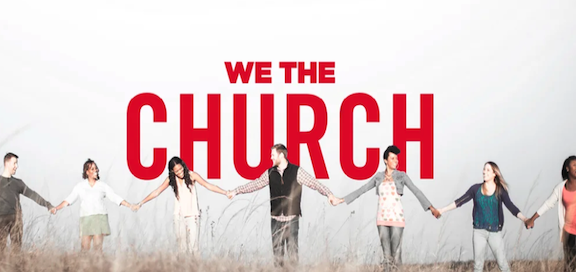
what would the church look like?
I’ve let that roll around for awhile, and I’ve decided that I can……and will, do better.
And you?